New Online Options Available Now Learn More

Order Warranty

Author: Platinum Team

hvacSummer is fast approaching.  A good way to be prepared for the hot, lazy days of summer is to have your air conditioner all ready to use.  There are some pretty basic things that can be done to care for, and improve the performance, of an air conditioner. Following are some home maintenance tips to help ready your AC for the summer.
Air Filters
Air filters are important part of your air conditioner that can be relatively easy to maintain. Checking and changing air filters once a month will help your AC operate at optimal efficiency. Dusty filters can limit air circulation and may damage your air conditioner. When you shop for air filters, choose ones that don’t let light pass through the filter. If you can see light, they will not be as effective at catching debris.
Thermostat
Updating the settings on a thermostat is another small home maintenance activity that can assist the efficiency of an AC. You will want your home at different temperatures as the seasons change.  This can also help you save money on energy bills. If you don’t already have one, considering installing a programmable thermostat.  This will allow you to adjust the AC temperature settings according to your schedule. The recommended temperature settings are 78 degrees when you are home and 86-88 degrees when away. Regularly changing thermostat batteries can also assist in keeping your AC running smoothly.
Condenser
The AC condenser is usually located outside the house. It is may get clogged up due to the build-up of dirt and other yard debris, including lawn clippings and leaves. Any grass or weeds growing near your condenser should be removed to improve airflow.  A condenser typically sits on a concrete pad.  Check to be sure the pad is level.  If not, it can be evened out by lifting the pad, putting down some rocks or gravel and then replacing the pad. Outside condenser units should be covered in fall and winter. This will help protect them from the leaf accumulation and any ice buildup. A dirty condenser can negatively impact energy efficiency and shorten its life.
Window units
Window units are usually designed to cool one room.  If they are more powerful, they may help cool adjacent rooms as well.  Window units basically work the same way as central AC, but are a smaller version. They can cost more money to operate. The biggest home maintenance problem for window units is dirt buildup. If too much dirt accumulates, the fan may become blocked and decrease the level of cool air being blown out from the unit. Window unit filters should be replaced at the beginning of the summer and monthly after that.  Most of the components are sealed within the unit, so it is best to leave any major repairs to a professional AC service company. If you need to have a unit repaired, you can save money by taking it to the repair place yourself, and avoiding a charge for a service call. When the weather is cold, protecting your window unit from snow and ice will help to prolong its life. You can remove it altogether and put it in storage, or cover the outside part.
Reducing the strain on your air conditioner
Air conditioners may get overheated in attempting to compensate for additional heat generated in a home.  A home maintenance project that may decrease the strain on your AC is to further insulate your attic, if you have incomplete or insufficient insulation.  It can be relatively inexpensive to add more, or have Fiberglas blown into your attic. This can help further cool your house, reduce your AC bill and prolong the life of an air conditioner.  Increased insulation may also help to keep your home warmer in the winter and reduce your power bill.
Stoves, dishwashers and laundry machines can also produce extra heat in a house and push your AC to the limit. In order to off-set more heat, consider grilling outside to reduce the temperature in the kitchen.  Run dishwashers, dryers and laundry machines, in the evening, when it is cooler outside.
Air conditioners are an essential part of keeping a home cool in the summer.  Keeping them well maintained will improve their efficiency and prolong their life. Some basic home maintenance projects can help keeping them running strong all summer.

solarpanelsIf you’re like many homeowners, you may have recently received a bill from your utilities provider that was less than pleasing.  In almost every major market, the cost of energy continues to rise.  In an economy that is challenging people’s budgets everywhere, an energy efficient home is a more attractive option then ever before.  Contrary to popular belief, many of the solutions that can improve your home’s energy efficiency aren’t as difficult as you may think.  Identifying some of the major energy drains in your home is the first step.

Insulate And Weatherize
The U.S. Department of Energy found that more than one third of the energy waste in an average home comes through heating and cooling loss.  This loss is almost always a result of poor or insufficient insulation.  Identifying areas of poor insulation can be fairly simple.  In cold environments, drafty zones are the primary suspects.  Attic areas, fireplaces, and small holes in walls can all be points where heat is escaping.  These same points will create cooling deficiencies in the middle of a hot summer.  An energy efficient home can address each of these areas through added insulation, hole patching, and re-caulking.
Window Panes
Homeowners love their windows.  They are the connection to natural light, great views, and airflow for many homeowners.  But they also have the potential to waste a lot of energy.  A recent study estimated that windows alone are responsible for 10-25% of home energy waste.  If your home has older windows with single pane technology, you may be throwing money out the door every day.  Find out how old your windows are, and look into new windows with a minimum of double pane technology.  The upfront cost of new windows can be realized through energy savings in a matter of a couple years.  If you’re unable to replace your windows, consider clear plastic sheeting, which is designed to act as a kind of second pane at a much smaller cost.
Light Bulbs
Recent years have seen incredible advances in light bulb technology.  If your home is still filled with incandescent light bulbs that are on every night, you’re wasting money!  The newest bulbs are called compact fluorescent bulbs (CFLs), and they use 75% less energy than traditional bulbs.  Despite being slightly more expensive to buy, they typically recover that cost through energy savings in less then six months.  This is great news for people trying to design a more energy efficient home at a smaller cost.
Programmable Thermostats
Perhaps one of the simplest solutions in creating an energy efficient home is the use of a programmable thermostat.  The U.S. Department of Energy estimates that Americans waste nearly $200 annually due to improper programming of thermostats.  If your home doesn’t have a thermostat that allows you to schedule and program your heating and cooling, you should consider upgrading immediately.  Once you’ve obtained one, it’s important to schedule your furnace or air conditioner to be off at times your home is unoccupied.  Also, you can create a much more energy efficient home by simply dialing back the temperature a few degrees during the winter, and up a few degrees throughout summer.
Time To Consider Solar?
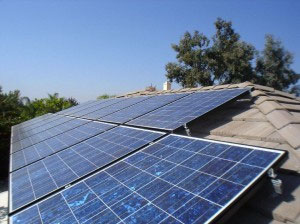
Of course, there’s no greater use of energy than the actual electricity you pay for each month.  If you’re thinking of a bigger investment to create your energy efficient home, you may want to look into solar power.  Like other technologies, solar electric panels have made huge advances in recent years.  Smaller panels are capable of capturing even greater amounts of energy.  While going completely “off the grid” is a challenge, effective solar panel systems can cover nearly 75% of your home’s total energy needs.  In some markets, excess energy that your panels collect and your home doesn’t use can be sold back to the utilities company for a profit.  Solar panel systems are a more significant up front expense, and they should be installed by qualified professionals

On The Path To Efficiency
As this list reveals, many of the drains on your home’s energy efficiency can be addressed through a little bit of investigation and hard work.  If you want a comprehensive understanding of where your home is wasting energy, you may want to look into an energy audit.  The most important thing is to get started.  An energy efficient home can be both a source of pride and savings for homeowners everywhere!

Getting your roof in shape now will give you peace of mind knowing that when the monsoons hit later your home and belongings will stay dry. By following a few steps you can easily determine the condition of your roof. You should start with inspecting it to make sure it is in good enough condition to move all that rain water away from your house. You can also do most of the minor repairs at the weak spots you find before the water can do any more damage.

Start by inspecting the roof from the outside. You may need a sturdy ladder that’s tall enough so you can see every part of the roof or be able to climb up onto it. Look for any roofing material that’s come loose. You may want to carry a hammer and the other materials needed so you can replace loose or missing shingles or tiles as you find them. Wood shake style shingles can be very slippery when wet so be very careful walking on this type of roof. You will want to check for corrosion or rust if you have a metal roof. No matter what type of roofing material you have, if there are slopes check the valleys where water or debris can accumulate and cause mold or rot. There are also often flashings in these areas, which are metal pieces used to deflect the flow of water. You will want to check to make sure any of them are still securely held in place.

After finishing inspecting the top of the roof you may want to walk around the parameter of your home and visually inspect the gutters. They should be securely fastened to the house. The downspouts need to be facing outwards so that the water will be diverted away from your foundation. While walking around your home you can also inspect any eaves or overhangs to make sure they do not show any signs of water damage. If there are water spots on them you may want to double check that section of roofing material to find the problem.

You may want to go inside your home next to check the ceilings for any signs of water damage. They are easy to spot because your ceiling or drywall will be discolored. A flashlight may come in handy when there’s not a lot of light. You can use the flashlight too when inspecting the attic if you have one. Safety is extremely important when trying to navigate around all of the beams and rafters. You should look for any problem spots or rotted wood where you can see that water has leaked inside your home. Any insulation material near a leak may still be wet. You can also check for leaks by turning off your flashlight and looking for any places where you can see the sunlight coming in from outside. If you can see the sunlight coming in from outside that means there’s a hole there that needs to be fixed. If you have any questions about any repairs you may want to talk to a roofing professional to avoid doing anything incorrectly.

Once you have completely inspected your home and fixed any minor repairs you may want to check your current homeowner’s insurance policy to see if have roof leak coverage. Many policies cover damage from hail, lightning and other types of storms. But you may need to get a separate coverage to protect yourself from expensive leak damage. If you do not already have it you may want to talk to an insurance agent. Extensive water damage can be costly and it may require you to have an entirely new roof installed, as well as replacing damaged support beams and drywall inside your home. Roof leak insurance may be an affordable and cost effective way of protecting your home.

poolWith the winter snows finally melting away and the temperature steadily rising, it may be time to start on all kinds of new projects and maintenance on your home. Certain parts of your home need seasonal maintenance, and now that winter is over, it’s time to get started on it. If you own a pool, you now might want to think about getting it ready for the summer. Pools can take quite a bit of maintenance; so getting a jump on taking care of it now should allow you to enjoy it all summer long. If you haven’t done so, you might even want to consider getting your pool covered with a home warranty. Here are some common maintenance items you may face with your pool and the advantages to having your pool covered under your home warranty.
If your pool has been covered all winter long, it’s now time to peel that cover back. Not all homeowners drain their pool in the winter, but if you decided to drain it, you will still need to turn everything on and make sure it’s running okay. When you turn your pool on to test it out, you are making sure that is runs quiet and that there are no leaks. You’ll want to check around the actual pump for leaks. Getting to cracks and leaks early can save you a lot of time and money. It’s much easier to take care of leaks when they are still small, so inspect your pool very carefully.
Another thing that you will want to do is test the total dissolved solids level (TDS) of your pool water. This is testing for things like calcium to make sure that the level is not too high; as such mineral buildup can interfere with your pool working properly. The risk of such buildup is higher in areas that have hard water. If your TDS level is too high, you may need to drain your pool and fill it with fresh water.
As stated above, you don’t necessarily have to drain your pool every year. At the same time, you will want to drain it every three years or so, and don’t wait longer than five years between pool drainings. It is advisable to hire a professional to drain your pool for you. While it is drained, the professional may be able to clean your pool for you as well. This will help you to keep on top of hard-water stains in and around your pool. You should also monitor your pool’s chlorine levels to make sure that it stays at an acceptable level, and shock it if necessary to help prevent bacteria and algae growth.
A huge part of getting your pool ready for the summer is to inspect all of its equipment, safety features, and wiring. You’ll want to make sure the diving board is in good working order and that any railings are firm in place. Make sure any slides or ladders are also secure and all light bulbs are working. You may be able to get help from an electrician if you are concerned about your pool’s wiring.
Getting your pool ready for summer can be a lot of work, so getting it covered under your home warranty is a great idea. There are a lot of things that can quickly go wrong with a pool from year to year, and if it’s not covered under a warranty you are often left footing the bill. Even insurance might require you to meet a deductible before helping you out with needed repairs or replacement. Home warranty coverage could help you with the costs of certain maintenance, repairs, or equipment replacement. If you are purchasing a home with a pool, consider putting the pool under your home warranty. If you run into any issues, you will really be glad you did.

Getting your home ready for the long, hot summer is one improvement project that will help keep you cool until the thermometer starts dropping again. You may also find that spending a little time and money now will make it easier to maintain your home through the different seasons.

You may want to start by doing an energy audit. Walk around the outside of your house and look to make sure all of your windows are sealed properly around their frames. If not, you may want to get some chalking and seal any cracks between the frame and siding. There are several types of the product available that are made out of very durable silicon, which can dry in a few hours.

Next check the outside vents from the attic to make sure they are in good condition and are not blocked by excess dirt or dust. Give your entire roof a good going over too. You will want to make sure any fan covers were not blown off by any recent storms. Loose or missing shingles or other roofing materials will also need to be replaced or repaired. Check any windows going to your basement to make sure they are also sealed properly to help keep that area cooler. Next you will need to check inside your attic if you have one. Putting insulation materials throughout this area will help keep the heat from the roof from getting down into your living space. Many new products are available that are more affordable. Many home improvement stores carry rolls of insulation material you can install yourself without using any special tools. If you have enough in your budget you may want to hire professional installers to do it for you. No matter how much you can afford, you will find that adding or upgrading the insulation may dramatically improve your ability to keep your home cooler in summer.

Some parts of your home may get warmer than others if they are exposed to the sun the entire afternoon. And it may be harder to cool off that part of your house even after the sun goes down. You may want to plant shade trees that have broad leaves outside any large windows to block the sun. You may also want to consider having your windows tinted to reflect the sun and keep it from heating up your home. You can find these types of products at many hardware stores to install yourself. If installed properly tinted windows can last for many years. If planting trees or tinting your windows are not options you can buy heavy curtains you can pull close when you are not at home. The curtains will not allow any ventilation from outside but will block the sun too.

If you have an air conditioning system you may want to check to make sure it’s working properly too. Inspect the outdoor unit and make sure there isn’t any debris blocking it. Also inspect all of the electrical writing and any other hoses to make sure they are not cracked. You can turn the system on at the thermostat and check to see if it’s blowing cold air into your home. Inspect the air duct system for any leaks where sections of the tubing are taped together. Put on new tape to secure the sections to each other if needed. You may want to check the vents going into each room and remove any dirty or dust that can block the flow of air. Thanks to advances in cooling technology you do not have to invest in an air conditioning system for your entire home. You can buy a portable air conditioning unit that does not require installation. Just plug it in and it will cool off the room. No matter where you live you will want to be prepared for when the temperatures get too hot. By doing some preventative maintenance on your home now you can be comfortable inside while escaping the summer heat outside.

Purchasing your very own home is an exciting thing. It's probably something that you have been looking forward to for your entire life. As a homeowner, you will quickly find that there are a lot of things around your home that need maintenance. No matter when your home was built, it is important to keep up on maintenance and be aware when something is going wrong. If something does go wrong, hopefully you have a good home warranty in place to help you take care of it. Wiring problems are one area of home maintenance where things can go wrong whether or not you had your home wired professionally, recently, or a long time ago. It’s true that your home likely had to pass some sort of inspection when it was built, but that doesn’t make it immune to problems down the road. Here are some common electrical wiring problems you could find around your home and how your home warranty can cover them. Sometimes the power goes off and there seems to be no apparent reason. You look all over for the source, but can’t seem to identify what would cause the power in your home to go off. Once you check the circuit breakers, you may discover that the breakers have been tripped. There can be various reasons why the breakers in your home would trip. Sometimes the breakers are wired incorrectly, there is a poor connection with the breaker, or there is some issue with the outlet connected to the breaker. Overloading can be another wiring problem that can cause issues in your home. Overload is when you have too many things going on at once, such as having too many lamps plugged into your wall or extension cords running through your home. This can cause different items and components to heat up and could cause a fire—or trip your breakers, as mentioned above. High wattage bulbs are another common problem. Some homeowners disregard the wattage limit on a given light fixture and put in bulbs that carry a lot more wattage than necessary. This could cause your bulbs to burn out faster, but it also makes the light base extremely hot—which could also put you at risk for a fire in your home. No matter how many issues the wiring in your home has, you should still find your electricity bill is staying around normal. If you notice your bill is extremely high, you might want to find out how much your home is actually using and whether or not your meter needs fixing. When your wiring is affecting your bills, it can be advisable to get help identifying the problem as quickly as possible. Home warranties can be useful in situations where your home is having wiring issues. Although a warranty is not exactly like an insurance policy, it can still protect you and your possessions. With a home warranty in place, you may be able to get someone to come out and fix your wiring problems free of cost to you, for instance. If the wiring problems affected certain appliances in your home that are covered under your home warranty, you may also be able to get those replaced at no cost to you. When you purchase your home warranty, you should make sure you know what it does and does not cover. Having a home warranty that covers electrical wiring can be extremely useful, however, as wiring problems are bound to occur eventually no matter how old or new your home may be. Owning a home is very exciting, but it also brings with it a lot of responsibility. There are many different common wiring problems you can run into with your home, from tripping breakers to unexplained electricity bills and more. Getting home warranty coverage over the wiring in your home can be very beneficial, especially if you have no idea why you are having such wiring problems. Before purchasing your home warranty make sure you understand exactly what it covers. This way when problems arise, you can rest assured that your warranty will back you up.

moneyhousesOnce you’ve bought your home, there’s still work for you to do. And that doesn’t include buying furniture and getting your new house decorated. Protect your new investment with a home warranty and take away some of the worry that comes with owning a home.
How to Get a Home Warranty
Whenever you make an offer for a home, you have the option of requesting that the home warranty be taken care of by the seller; either that or you can pay for the warranty by yourself. If the seller decides to cover half of the warranty, then it might not last for as long as you’d like for it to, so make sure that you look over the details of the warranty before agreeing to it. Once you close escrow, your new home is covered under the warranty. You’ll be given a plan number to call if you ever have a repair that needs to be taken care of. The repair technician will be one contracted by the company that issued the warranty, and all you’ll have to pay is the trade call fee.
What is Covered by a Home Warranty?
Incidences covered by a home warranty include garage door openers, duct work, electrical systems, water heaters, exhaust fans, garbage disposals and stoves. Since not all home warranties cover air conditioners, you’ll want to check yours to see if it is or if it isn’t covered. If it is, it’s a good idea to make sure that you have maintenance performed on your air conditioning unit twice a year in order to prevent breakdowns and to keep small problems from becoming big problems. For an extra cost, you can add roof leak repairs, swimming pool equipment and septic systems to your home warranty.
Who Should Get a Home Warranty?
It doesn’t matter if you’re buying a home for the first time or if you’ve owned four houses in the past, you should still get a home warranty. If it’s your first time buying a home, you don’t know what all goes into keeping a home in working order, so you’ll need every advantage and assist that you can get to keep from wasting money and to keep from having a horrible first time buyer’s experience. If you’ve owned a home before, then you have a better idea of some of the more common repairs that homes need. You also have a better idea of how much they cost, therefore you already know what an advantage it is to have a home warranty.
While you might hate having to pay extra for your home to get a home warranty, you’ll certainly be glad you did once you start seeing how much it would otherwise cost you for household repairs.

toolsUnlike living in an apartment, you have to pay for and take care of all of your home repairs. Until you have to pay for them yourself, you might not realize how much it costs to have you bathroom sink unclogged or your living room fan repaired. It’s recommended that you have an idea of some of the more common household repairs and how much they’ll cost you so that you and your finances can be properly prepared for the inevitable.
Locks and Doorknobs
Since you use doorknobs and locks every day, they stand more of a chance of becoming damaged or malfunctioning. If a doorknob becomes loose enough, the handle can stop working and you’ll find yourself fighting like mad just to open the door. The reason the doorknob becomes loose in the first place is because the small screw that attaches the doorknob around the spindle gets loose. Over time locks can stop sliding the way they should and can become hard to move. It can cost you anywhere from $115 to $200 to have your door lock replaced.
Blocked Drains
Clogged drains are both common and frustrating. You can always try to unclog the drain yourself, but with some methods you can wind up doing more harm than good, which can cause you to have to spend more money when you finally call a professional to have the drain unclogged. In order to have your drain unclogged, you’ll be looking at a $200 to $220 bill, depending on the severity of the clog. Do everything you can to keep your drains from clogging by occasionally pouring chemical cleaning agents down the drain.
Leaks in your gutters are something else to watch out for. Such leaks can be caused by deposits of ice that either melt or crack in the seams of a downspout. Too keep this from happening, use gutter caulk.
Overflowing Toilet
You’re guaranteed to experience at least one or two overflowing toilets as a homeowner. What happens is that the toilet becomes blocked and the valve remains open instead of shutting like it normally would. One way you can try to keep this from happening is by taking the top off of the toilet tank and finding the tank ball right above the outlet valve and pushing into the valve in order to keep the water from flowing. If you have to call a plumber, you can expect to spend $125 to $185.
Educate yourself about some of the common household repairs and breakdowns that you’re likely to experience so that you know what to do and how much you’ll probably have to spend before the incident happens. If it’s at all possible, looking into getting a home warranty to make the costs cheaper and easier on you.

A home warranty is like a garage that covers your entire house and keeps it safe from bad financial weather. It doesn’t matter if you’re buying a home, selling a home or if you currently own a home, there are several special benefits for each category when it comes to having a home warranty.

Benefits for Sellers

Your home will be much more desirable to potential buyers if they see that the home is covered by a home warranty plan. You’ll be able to sale your home that much faster if you get a warranty before putting your home on the market. A second benefit for sellers is that they can avoid extensive delays in closing if they get a warranty for their home, minimizing the odds of an equipment or system failure slowing down the closing process. A third benefit for home sellers for getting a warranty for their home is that they’ll save money if the home repair or problem is caused by a workmanship issue that needs to be fixed more than one time. In some cases, your repairs are covered for 180 days.

Benefits for Buyers

One of the immediate benefits of a home warranty if you plan on buying a home is that you’ll save money and you won’t have to make major changes to your budget to save up enough money for expensive home repairs and appliance replacement. With a home warranty, all you’ll have to pay for is the trade service call. Another benefit is the comprehensive coverage, meaning that your warranty covers appliances as well as systems and that there aren’t any square footage restrictions. A third benefit is that you’ll have a technician that has been pre-screened to take care of your repairs and replacements rather than a technician who may or may not know what they are doing and may or may not have the proper training to adequately handle your particular repair.

Benefits for Current Homeowners

With a home warranty, placing a claim is easy, free and can be done online as well. Something else to think about is that with a home warranty you can call for as many system and appliance repairs as you need without worrying about going over a limit. A third benefit for current homeowners who have a home warranty is that they can save a lot of money on popular appliances if they ever decide to remodel their home or upgrade their appliances. If you don’t already have a home warranty, look into getting one whether you’re buying, selling or currently own a home. Your nerves and your bank account will thank you for it.

Buying a home is generally the largest purchase that an individual will make.  Costly repairs and replacement of older items that can be found in an existing home are not usually things that a new homeowner wants to deal with.  It can be both expensive and time consuming.  Unfortunately, as a home ages it is bound to have some items that need to be repaired or replaced.  To protect your investment and your sanity when buying a piece of real estate, be sure to investigate home warranty options.  A home warranty provides coverage that a standard hazard insurance policy would not.  Fill in the gaps in your home insurance policy with a home warranty.

Homeowner’s Insurance Policy Coverage vs. Home Warranty

In order to close on a home it is required to have a homeowner’s insurance policy of some sort in place.  The lending company can even require a homeowner to obtain specific coverage levels or endorsements to ensure the risk they are taking on as the lender would be lessened.  Only under rare circumstances would a homeowner get away without having an insurance policy on his home.  It’s simply a must have item.  There are always gaps in coverage that provides the insurance company a way to wiggle out of some responsibility, however.  In order to fill these gaps, particularly in the first year of homeownership, a homeowner can obtain a home warranty to provide coverage where the insurance policy typically ends.  Major appliances and electrical, heating, and plumbing systems would be covered.  The out of pocket expense to obtain a home warranty is negligible, particularly when compared with the coverage it provides.

Manage Unexpected Household Expenses with a Home Warranty

A home warranty can protect you from having to deal with the expenses of repair and replacement items within your home. In fact, it can help you manage those items which will eventually expire in a way that reaches well beyond a standard insurance policy’s provisions.  Usually a home warranty is one year in length and covers major appliances and systems that an insurance policy does not.  A basic warranty would provide coverage for the following items:

  • Ductwork
  • Central heating
  • Air conditioning
  • Plumbing systems, stoppages and toilets
  • Water heaters
  • Electrical systems
  • Telephone wiring
  • Garage door openers
  • Ceiling fans
  • Ovens, ranges, cooktops
  • Garbage disposal
  • Dishwashers

In addition to these items listed here, there are many more systems and appliances that would be covered under the provisions of a home warranty.  Rather than worry about the expenses associated with these items during the first year of homeownership, manage them with the purchase of a home warranty.