New Online Options Available Now Learn More

Order Warranty

Author: Platinum Team

A home warranty plan will allow your buyer to relax, knowing all the comforts inside and around their home are being backed by a warranty they can trust and service they can depend on. We know a home is personal, so at Platinum we take the needs of our clients personally. Platinum’s core commitment to excellence has designated this boutique local company to become the premiere warranty company in Arizona. Help your clients avoid the surprise of expensive repair bills by recommending someone you trust.

Platinum is the leading home warranty program in the Valley with the best on-staff factory-trained technicians in the industry. We pride ourselves on our ability to offer a 24-hour Emergency Response Time Guarantee, ensuring that we'll have a technician at your door when you need it most. Our service team is standing by 24 hours a day, seven days per week, so no matter when something goes wrong you will have that team of professionals heading your way in a hurry to make sure your house is up and running.

Our home warranty plans cover all types of items in homes, so neither you nor your clients have to incur the high price of repairing or replacing these items if and when they break. We do 90% of the work with our technicians to provide you fast and reliable service. Don’t waste time replacing and repairing appliances yourself when you can work with a company that does the work for you. Contact us today for more information and we will get to work on your project, coming up with a complete policy for you and your home.

“Platinum Home Warranty helped me close my deal quickly by fixing the air conditioner immediately after it was red tagged by the home inspector.” - Donna M., Glendale Realtor

Platinum Home Warranty is second-to-none in customer service. Their representatives are courteous and friendly every step of the way. The technicians are prompt, competent and friendly. They exemplify "Service with a smile."- Katie M. Phoenix Homeowner

guidelinesNew home constructions come with state of the art appliances, upgrade HVAC systems and are frequently built with energy efficient materials. People purchase new homes for a plethora of reasons, but one major motivator is a home warranty. New homes that come with a warranty cost homeowners fewer out of pocket expenses. While older homes also qualify for home warranties, there are a number of restrictions and pre-existing conditions that are taken into consideration when plan costs and coverage rates are calculated. Homeowners that choose to have their houses custom built can also find independent warranty companies and purchase a plan directly. Home warranties provide comprehensive protection, and buyers can choose to extend their plans when the original coverage runs out.
When you first get a new home warranty, you will need to check the guidelines. Although most repairs will be covered, you cannot assume that servicing and other fees will be included. If your warranty was automatically included with the purchase of your home, there will be no additional fees or premiums for you to pay. Homeowners that purchase their warranties direct are expected to keep up with their payments or else they risk losing coverage.
Once you understand your home warranty’s guidelines, scheduling repairs will be extremely convenient. You will be given a customer service phone number that you can access whenever you want to have your home repaired. Some warranties require homeowners to work with a list of approved vendors, but others allow homeowners to choose the companies that they want to work with freely. Find out what types of coverage restraints you may face, such as 30-day waiting periods and exclusions.
Some consumers confuse homeowners insurance with home warranties. While both of these products do help homeowners to pay for repairs, they are actually quite different. A homeowner’s insurance policyholders is required to submit claims in order to be reimbursed for its expenditures. These claims must be approved before a check is cut by the homeowner’s insurance company. With homeowners insurance, property owners might have to wait months before even being partially compensated. The homeowners insurance claim process can be further complicated by a denial.
With home warranties, very little paperwork is needed to get approved for home repairs. The guidelines detailed in home repair service plans tell homeowners what is covered versus what isn’t. A service technician can be sent to your home the same take that you make a repair request, and rarely are homeowners required to pay any money. If any of the guidelines included in your home warranty or unclear, you should immediate seek clarification.
If you are about to purchase a new home, find out if it comes with a warranty included. While new homes are considered easier to maintain, there are a lot of things that can go wrong soon after moving in. Buying a warranty for your new home will allow you to free up more money and alleviate stress. It will also help to streamline the home repair scheduling process, so you won’t have to keep close tabs on your contractors or feel obligated to check behind their work. A home warranty won’t replace homeowners insurance, but it can work as a great second line of defense.

pipeIf you have ever owned a home, you have probably, at one time or another, run into a plumbing problem.   Many plumbing problems can be easily avoided and, if you still run into a plumbing problem, there are many that you can probably fix yourself.  There is certainly a time and place to hire a professional plumber who's expertise may be necessary for certain plumbing problems.  But, if you arm yourself with some knowledge and put some tips into practice, you can avoid many common plumbing problems or quickly remedy the ones that do arise.
One of the most common plumbing problems  is clogs.  Whether it is one large item or a buildup of smaller items, clogs happen.  Sometimes clogs are completely out of your control but, more often than not, it is the direct result of someone putting something down your drain that should never have been there in the first place.  With toilets, it is important to avoid flushing anything down other than waste and toilet paper.  Make sure everyone in the house, including kids, know this rule.  When you flush anything else down a toilet, you are inviting clogs.   Bathroom drains, whether shower , tubs or sinks, are also prone to clogs.  Hair and soap residue builds up rather quickly so it is important to avoid hair going down the drain as much as possible with the use of strainers.  Additionally, if you see a buildup forming, remove it immediately and run hot water down the drains often to prevent major clogs.
With your garbage disposal, avoid putting anything greasy, fibrous or non-biodegradable down the disposal.  Many of these items can cause major clogs for your disposal.  Also, it is always important to run the water for 15-20 seconds before and after running your garbage disposal.  Another common plumbing problem is leaking taps.  Leaking taps are not only a nuisance but they can actually be quite expensive.  Even a small leak can mean big expense for utility bills.  PRWeb.com discusses what is involved with a leaky faucet repair, "Leaky faucets or fixtures are yet another plumbing issue that occurs over time, due to wear and tear. Leaks most often develop from rubber or plastic seals (seals, washers, O-rings) wearing out. Even a slightly damaged or worn out seal can allow a drip of water to pass through every few seconds.  Regardless of which type of faucet, the process of repairing a dripping faucet is similar for all of them. "  Also, plumbers will note that they are often called when the water heater has problems or stops working.  One way to extend the life of your water heater and keep it running efficiently is to drain the water heater and remove sediment and dirt build up.  With regular maintenance and proper cleaning, you can avoid many common plumbing issues and keep your home running efficiently.

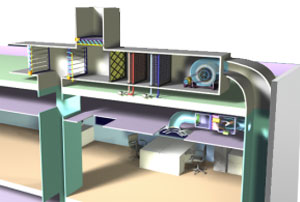
diagramSome homes have HVAC units and some homes use heat pumps to heat their homes.  If you are unfamiliar with what exactly a heat pump is, Energy.gov offers a brief explanation, " For climates with moderate heating and cooling needs, heat pumps offer an energy-efficient alternative to furnaces and air conditioners.
Like your refrigerator, heat pumps use electricity to move heat from a cool space to a warm space, making the cool space cooler and the warm space warmer. During the heating season, heat pumps move heat from the cool outdoors into your warm house and during the cooling season, heat pumps move heat from your cool house into the warm outdoors. Because they move heat rather than generate heat, heat pumps can provide equivalent space conditioning at as little as one quarter of the cost of operating conventional heating or cooling appliances."  A heat pump can actually be a very energy efficient choice for homes that are in moderate climates.  Heat pumps, just like HVAC systems, require routine maintenance in order to continue to operate efficiently and effectively.  You can hire a professional to inspect your heat pump once a year to ensure that everything is in working order.  They will inspect things like ducts, filters, and coils as well as check for duct leakage, verify airflow, check for refrigerant leaks, inspect the electric terminals, lubricate motors and verify correct thermostat operation.  There is some basic maintenance of heat pumps that every home owner can do to ensure that heat pumps are properly and safely functioning.  Heat pumps have filters that need to be changed, usually about once per month.  Your heat pump owner's manual will offer specific instructions for how often you should change your filters.  By changing heat pump filters, you keep your heat pump running efficiently which will extend the life of your heat pump and maximize energy savings each month.  Regularly check the area around your heat pump to make sure debris, weed and plants have not overgrown or built up near your heat pump as this can reduce airflow to the heat pump and decrease efficiency as well.  Energy.gov also notes that a properly maintained heat pump does make a difference in energy use, "Like all heating and cooling systems, proper maintenance is key to efficient operation. The difference between the energy consumption of a well-maintained heat pump and a severely neglected one ranges from 10% to 25%."  When you do these things, and hire a professional to inspect the more intricate details of your heat pump, you can maintain efficiency, save money and keep your home nice and warm all winter long.

watersystemMany of us have heard about hard and soft water.  We have probably heard that we do not want hard water, but do we really know why?  While hard water is not dangerous to a person's health, it has a number of undesirable effects.  SaltInstitute.org discusses what hard water is and where hard water is most common, " As it leaves the skies in the form of rain, water is soft, meaning it is clear of impurities. But it picks up carbon dioxide and other impurities in the air. It also dissolves calcium and magnesium salts as it soaks through the earth and runs off into rivers or lakes and collects in reservoirs or wells. If the water, in these processes, picks up a substantial amount of invisible dissolved rock, calcium carbonate and other substances, it becomes “hard” a defined term... U.S drinking water contains an average of 7.1 grains per gallon/121 mg/L of hardness.
The U.S. Geological Survey calculates that 89.3% of U.S. homes have hard water with the hardest water found in the belt running from Kansas and Texas on the east to Southern California to the west with up to ten times the minimum defined concentration of calcium carbonate to be “hard.” There are indications water is becoming even harder. The ever-increasing demand for water has lowered the water table, causing a greater draw-off at the surface which raises the natural hardness of water."  Hard water does not create as good of a lather when bathing, can form lime scales in water heaters and it clings to skin and fabric, dulling fabric colors and shortening their life.
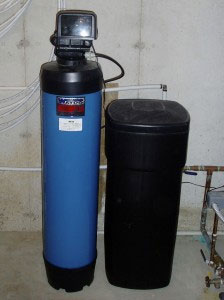
For many, the solution is to install a water softener.  Water softeners change hard water to soft water but they do require some maintenance.  While there are many automatic systems that do most of the maintenance for themselves but, even so, water softeners should be  routinely checked and maintained.  LivingSpace360.com discusses what should be regularly maintained with your water softener, "The brine tank must be inspected for salt build up which will need to be dealt with. You must also be sure that the salt level is adequate. Consult the manufacturer for type of salt used, but evaporated salt may be your best choice for low maintenance, though it is more expensive than other types of salt.  You will need to check the resin bed. Although they last many years, you should check periodically to be sure that all is well with this important part of your water softener system.  Usually a buildup of iron or other problem can be solved by cleaning. However, a growth of algae or visible bacterial build up may mean it is time to replace the resin bed."  By regularly maintaining your water softener, you can extend the life of your water softener and continue enjoying soft water in your home.

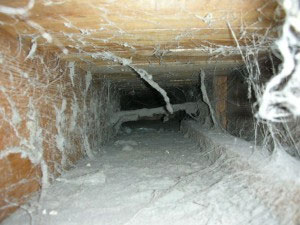
air-ductsWith homeownership comes a lot of maintenance.  There are so many things to take care of and remember, it is easy to lose track of things like air ducts and vents.  Many times, home owners cannot even remember the last time they cleaned their air ducts.  But, just because it may be easily forgotten, does not mean it is not important.  Additionally, if you have recently renovated your home, you will have increased incentive to clean your air ducts as the dust and debris can get caught in the air ducts and is then in the air that you breathe in your home.  The air quality that you and your family breathe each day is incredibly important and should be given priority.  You can use your vacuum with hose attachment to clean out your air ducts yourself or you can hire a professional air duct cleaner to handle the job.
Homeadvisor.com offers a good description of how professional air duct cleaning should work, "There are two ways of duct and vent cleaning. One system is connected into the ducting to provide suction. A high-pressure air hose is passed through the ducting to remove the particles from the interior. The other system uses a large specialized vacuum attached to a hose and a brushing system that is run through the ducting. Both systems are effective when operated by properly trained personnel.  A proper cleaning should include the following: cleaning of all registers, inside the ducting, and the interior of the heating and ventilating system.  The furnace fan must be cleaned, and if you have air conditioning or a heat pump, the coils inside the system must also be thoroughly cleaned. Finally, a disinfectant can be fogged through the cleaned system to eliminate any mold, bacteria, and dust mites that might remain.  Proper cleaning of a home should take a minimum of three to five hours, depending on the size of the house. If the home has more than one heating and cooling system, or the system is located on the roof, it can take longer. Most duct cleaning companies base their price upon square footage and/or the number of registers, systems, and levels to be cleaned and charge between $90 and $125 per hour to properly clean a duct system."
Air ducts have a direct effect on respiratory health and allergies as it helps control the quality of air that is circulated in your home.  For your HVAC to run efficiently it is incredibly important that you have a clean system.  Energy efficiency will help save costs on utilities each month.  It is important to maintain your air ducts so that your home's air will be safe and of ideal quality to breathe and to keep your HVAC system running efficiently.

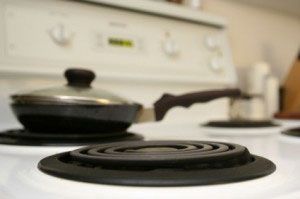
stove-topThe kitchen is, often, the heart of the home.  Most people spend a lot of time in the kitchen, cooking and preparing meals for themselves or their families.  The stovetop and oven are used frequently and, sometimes. messes are made.  It is very important to regularly clean your stovetop but you may be wondering if you are properly cleaning or if you should be doing more.  Just think about how often you use your stovetop.  Did you make some eggs this morning, or maybe cook some lunch for your kids, and then whip up a delicious dinner in the evening?  Dirt, food and grime can build up very quickly and not only is it unsightly, but it is also not the most hygienic space to cook your food.  Before cleaning your stovetop, it is important to note that if you have a gas cook top, it is important to ensure the gas taps are turned off.  Many stove tops, such as enamel, can simply be cleaned with warm soapy water.   It is best to avoid harsh cleaners whenever possible as they can sometimes damage the finish on a stove top.  Most grids and burners can be removed and then soaked in warm soapy water to remove any build up.  If you feel like soap and water are not getting the job done, there are many cleaning products designed specifically for cleaning glass and ceramic stove tops.  Additionally, there are special scarpers designed specifically for glass stove tops that can help remove particularly stubborn build up but it is imperative that you only used scrapers and cleaners designed for glass and ceramic stove tops to avoid damage.  Another important cleaning note is, do not forget the range hood.  If you have ever had a little too much steam or smoke when cooking, you have probably turned on the vent fan.  The vent fan is very handy at sucking up the unwanted steam and smoke and removing it, and there is a filter that prevents grease build up in the vent hood.  But, the filter accumulates the grease and needs to be regularly cleaned.  Depending on the frequency of cooking, clean your filters every few months to prevent major build up.  With regularly cleaning of your stove top, you can avoid major build ups that lead to hours and hours of painstaking cleaning and possibly, damage to your appliance.  With regular cleaning, your stove top should provide many years of good service to you and your family.
The very first thing you’ll want to do is install smoke detectors in your home near any sources of fire, such as your stove, oven, fireplace and dryer. If you already have smoke detectors in your home, test them at least once a month and make sure that they’re using fresh batteries. You’ll also want to keep your detectors free of dust by vacuuming them out in addition to having an escape plan and practicing it with your family in case there ever is a fire in your home.

As far as Christmas trees go, make sure that you buy one that has a fire resistant label. Decorative lights should never be used on a metallic tree under any circumstances since there’s a strong possibility that you could electrocute yourself. If you prefer to have a real tree in your home, make sure that the needles on the tree are fresh and that they aren’t falling off. Falling and hard needles can cause a fire. If there are any falling needles on the tree, make sweeping them up part of your home maintenance routine. It’s also a good idea to get rid of your live tree as soon as possible since a majority of home fires occur either after or on New Year’s Day.

Before you start a fire in your fireplace, make sure that you remove all decorations and that you have the flue open. It’s also a good idea to use a screen over your fireplace in addition to a fire resistant mat or carpet. Should you decide to use an electric heater, only use outlets that are designed to handle the amount of electricity required to operate an electric heater. Something else to add to your home maintenance list for the winter is to have your fireplace professionally cleaned. With kerosene heaters, check to make sure that you’re using the right fuel and that you only refill them outside. Kerosene will also expand when it’s inside of your home, so you don’t have to fill it up all of the way.

While cooking, make sure that you never leave your food unattended and that you keep all towels, potholders, papers and all other flammable materials far away from the stove and oven. Never try to move a pan of grease that has caught on fire. Instead, put a top on the pan to smother the flames before you turn off the heat. If you have small children, always turn the handles of pans and skillets toward the back of the stove so that curious kids won’t be tempted to reach up and pull them down to see what’s inside.

Seasonal home maintenance should also involve making sure that you have fire extinguishers in your home. You’ll also want to think about taking a fire safety and fire extinguisher class in order to make sure that you know the right way to use a fire extinguisher. Should you ever have guests over during the holiday season, make them aware of the fire escape plan as well and ensure that they know where the fire extinguishers are.

Use caution when enjoying your holiday season, and make sure that you adjust your home maintenance schedule as necessary during winter in order to stay safe.

tools
1. Water Repairs
Water is one of the biggest culprits of expensive and extensive home repairs and maintenance issues. It’s best if you have a routine maintenance schedule to check for water issues throughout your home, even if you don’t see signs of water damage. Even the smallest of water stains can be an indication of extensive and expensive home maintenance repairs, so you’ll always want to be proactive.
Make sure that you keep your downspouts and rain gutters clean and that you take care of any cracks that you might have in the stucco of your home. Whenever you’re repainting your home, only use high quality paints to keep water from seeping through. To keep water out of your walls and floors, be vigilant about recaulking your toilets, sinks, bathtubs and showers. Leaks in your windows can lead to mold and damage to the structure of your home, so take care of those as soon as you notice them. Another good tip is to keep all plants and vegetation around your home well-trimmed in order to make sure that rain runs away from your home.
2. Roof Inspection
Your roof protects everything underneath it, which is why it’s crucial that you stay on top of roof maintenance and repairs. Have a professional come out to inspect your roof at least once a year in order to avoid costly home maintenance repairs in the future. If you have an older roof or one that has been exposed to severe weather, you’ll want to have it inspected more often. The better you take care of your roof the better you’ll protect the overall value of your home. The more damage you have to your roof, the more expensive and complex the repair will be.
3. HVAC System Maintenance
You’ll also want to make sure that you stay on top of your HVAC system maintenance. HVAC systems include air conditioning units, furnaces, vents and heat pumps. It’s best that you have your HVAC system serviced once or twice a year, preferably before the winter and summer season when you depend on a working heater or air conditioner the most. Homeowners should also make sure that the vents in their home are clean and in working condition so that there’s less chance of them experiencing respiratory, allergy and other health complications. You might not realize it, but it’s entirely possible that the air inside of your home is dirtier than the air outside of your home. Staying on top of HVAC system home maintenance is a good way to improve your indoor air quality.
4. Peeling Exterior Paint
Protecting your exterior paint from peeling is another good way to maintain the value of your home. Peeling paint is another moisture issue that needs to be taken care of as soon as possible. If you do notice peeling paint, chances are good that you have a leak in your gutter or steam is trickling through from the bathroom on the other side of the wall. Make sure that all of your bathrooms are well-ventilated and that you take care of the moisture issue as soon as possible so that you can avoid having the siding of your home rot.
5. Termites & Carpenter Ants
Termites and carpenter ants can seriously compromise the integrity of your home. This is a maintenance issue that you can take care of your own by looking for pencil-thick mud tubes around your home and even tapping against the wall to see if you can hear anything that sounds like crinkling cellophane. Call a pest control professional as soon as possible if you even suspect that you might have a problem with termites or carpenter ants.
Staying on top of home maintenance can save you thousands of dollars and will maintain the overall value of your home. Create a maintenance schedule and stick to it.

VOC
The following five questions address one potentially harmful home product that many homeowners may not be aware of. Home maintenance means more than caring for your home, but also becoming aware of the potential health and environmental hazards that exist within that environment. By understanding the levels of VOC found in a typical can of paint, you will be one step closer to protecting your family and the world around you.
1.     What are VOC’s?
In a typical can of interior wall paint, there are many different chemicals and materials that have been mixed to create the right consistency and pigment. As research has shown, many of these cans of paint contain chemicals referred to as VOC’s. What are VOC’s one might ask? VOC’s, or volatile organic compounds, are compounds that contain carbon which easily vaporizes into air when released. When the VOC’s make contact with the air, elements react, and ozone is produced. When using paint high in VOC’s you are creating an environment in which these potentially harmful chemicals are released directly into the air of your home.
This wet VOC-containing paint has been shown to release a high amount of chemical substance into the air while still wet, and even one year after the paint has dried, may still give off a portion of the same toxic substance. Now that you know what VOC’s are, you may be wondering what risks are involved.
2.     What are the Potential Risks?
The dangers of VOC’s include many potential risks to health and environment. From a simple headache to potential cancer-causing toxins, the effects of VOC’s have been shown to be extremely harmful to humans and pets alike. When planning your home maintenance routine, you may want to now include awareness of toxins to your list. VOC’s not only affect your health, but can have a dangerous effect on the environment as a whole.
3.     How do they Effect the Environment?
As VOC’s make contact with the air, ozone is created and adds the pollution already existing in the environment. While the health of your individual home and family is important, the environment affects everyone and everything around you. If each consumer made the effort to change simple home maintenance procedures, the earth might be spared a little more pollution.
4.     What are the Available Alternatives?
Alternative interior paints have been created with much lower levels of VOC’s. These lower levels of VOC allow you to reduce the pollutants in your own breathing air, as well as the air in the environment. Keeping your family safe from these toxic chemicals is one home maintenance step that can affect the long-term health and well-being of your family.
5.     Where can these Safer Alternatives be found?
Low-VOC paint can typically be found wherever paint is sold. Ask someone in the paint department of your local hardware store to direct you to eco-friendly paint alternatives for your interior home maintenance and painting needs. Because paint-related products are some of the worst environmental pollutants in our society today, doing your part to reduce to pollution on the earth, as well as in your own home, can make a bigger impact than you may think.